

Hardly had it become known that Julia Klöckner was the target of a phishing attack via the messaging app Signal, when judgment was quickly passed in many comment sections:
“How could someone fall for something like that?”
The mockery came promptly. And it came predictably.
Yet precisely this reaction is actually the much bigger problem.
The reflex: “This wouldn’t happen to me”
When people read such messages, they often inevitably think:
- I would have recognized this immediately
- This is so obvious
- As a politician, one should definitely know this
These thoughts feel logical. But they are deceptive.
Because they are based on a crucial misconception: That phishing is a question of intelligence or knowledge.
The uncomfortable truth
Phishing doesn’t work because people are stupid.
Phishing works because people are human.
Attacks of this kind do not target a lack of knowledge, but rather:
- Trust
- Habits
- Stress situations
- Authority thinking
And precisely these factors affect everyone. Including those who are familiar with the topic.
ImportantAnyone who believes they are immune to such attacks has already made the first mistake.
Context decides – not knowledge
In hindsight, almost every phishing message is “obvious”.
But in the right moment, it looks different:
- A message appears to come from a known contact
- It seems urgent or important
- It fits perfectly into the current context
- One is busy or under time pressure
In this situation, it’s not your knowledge that decides – it’s your gut feeling.
And that’s exactly where modern attacks target.
A personal mistake – and that’s exactly what it’s about
I regularly deal with such topics, clarify them, and explain what to watch out for.
And yet, it happened to me too.
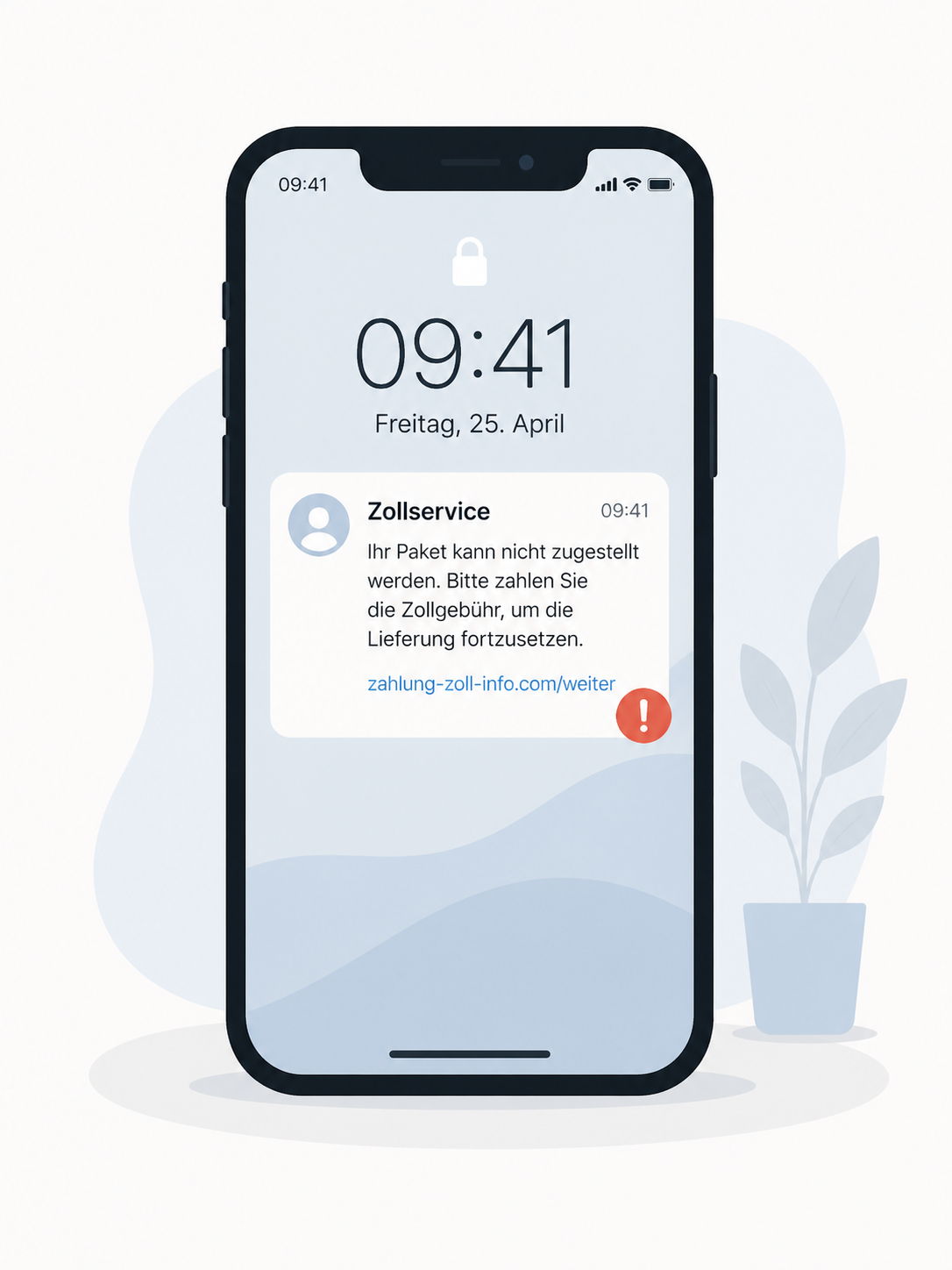
In the middle of daily life, under time pressure, I received a message about alleged customs fees for an international order. Nothing unusual, nothing that immediately triggers all the alarm bells.
I didn’t think about it for long. Just done. Because I was waiting for such an order at that time.
In the end, it was only 5 euros.
No big loss – but a clear example of how such attacks work.
NoteAttackers don’t always aim for large sums. Often, it’s about getting as many people as possible to “just pay quickly”.
The illusion of one’s own safety
That’s why I would never claim today:
“This won’t happen to me.”
Because exactly this attitude is dangerous.
It leads to carelessness, to confirming things more quickly, to overlooking warning signs.
ImportantSecurity awareness doesn’t mean never making a mistake. It means knowing that one can make mistakes.
Why mockery is misplaced
Mocking victims misses the real problem.
Because every successful attack provides attackers with valuable insights:
- Which methods work
- Which approach is credible
- Which situations make people particularly vulnerable
The attacks don’t get worse – they get better.
And while this is happening, many still believe they are invulnerable.
The real thinking error
The crucial question is not:
“How could this happen?”
But rather:
“Under what circumstances could it happen to me?”
This perspective makes the difference between overestimation and real security culture.
Conclusion
Phishing is not a problem of the uninformed.
It is a problem of the overconfident.
Not the insecure ones who fall for it first – but often the ones who believe they have everything under control.
The question is not whether someone falls for phishing. It is when – and under what circumstances.
And that’s exactly why the reaction to such incidents should not be mockery.
But rather a short, honest thought:
“Did I really do better?”
