

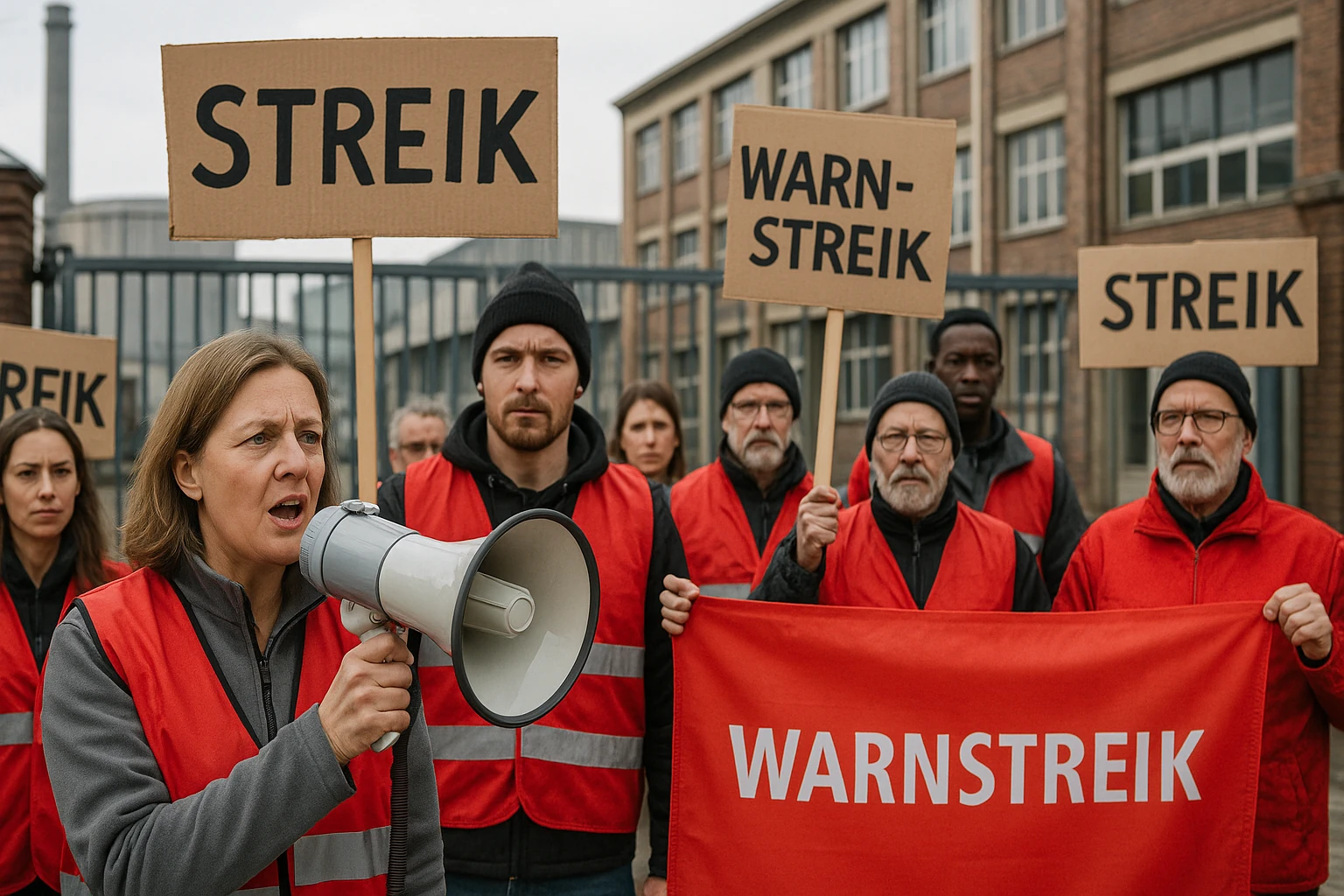
The German Right to Strike: Origins, Rules, and Significance
Origins of the Right to Strike in Germany
The German right to strike has its roots in the working class during the industrialization of the 19th century. A defining event was the Ruhr coal miners’ strike of 1889. Around 90,000 miners laid down their tools at that time to fight for higher wages and shorter working hours. Despite state repression, the strike strengthened the unions and contributed to the abolition of the Socialists’ Laws in 1890. A meeting of the striking workers with Kaiser Wilhelm II. highlighted the political relevance of the labor struggle [^1] [^2] [^3].
In the Weimar Republic, political strikes with societal-changing effects followed, such as the general strike of 1918 and the Kapp Putsch of 1920. After 1945, strikes established themselves as an important means for tariff autonomy and social rights, including the November strike of 1948 and shipyard worker strikes in the 1950s. Further defining strike movements followed in the 1960s and 1970s with social and political demands [^4] [^5].
Case Study: The GDL Locomotive Drivers’ Strike (2020-2024)
In recent years, the strike of the German Locomotive Drivers’ Union (GDL) has been one of the most significant and longest labor conflicts in the German transportation sector. The GDL, a branch union, mainly fought with Deutsche Bahn for the introduction of a 35-hour workweek with full wage compensation, better working conditions, and higher wages. Between 2020 and 2024, there were multiple warning strikes and work stoppages that significantly affected long-distance and regional transport.
The conflict was characterized by legal and tariff policy peculiarities, as Deutsche Bahn questioned the GDL’s tariff authority. The founding of the “Fair Train” temporary worker cooperative increased the complexity. After long negotiations, an agreement was reached in 2024, which provides for a gradual introduction of the 35-hour workweek. The conflict shows how modern labor struggles have not only economic, but also legal and political dimensions [^6] [^7] [^8].
Reasons for the Right to Strike
The right to strike enables workers to collectively assert their interests against employers. It has made many social achievements possible, from shorter working hours to co-determination rights. Democratic participation and social justice greatly benefit from the possibility of collective labor action [^4].
What is allowed by the right to strike and when and how?
Strikes are legal if they:
- Are organized by a union,
- Pursue tariff negotiation goals,
- Are not politically motivated,
- Do not conflict with existing collective agreements (peace obligation),
- Are proportionate and used as a last resort.
Wild strikes or political strikes are prohibited. Employees participating in a lawful strike are protected from dismissal, and employers can respond with lockouts [^9].
Difference between union-organized and wild strikes
A union-organized strike is the lawful means of labor conflict. It requires the participation of a tariff-qualified union, takes place within the framework of collective bargaining negotiations, and is subject to certain rules (e.g., peace obligation, proportionality). Employees participating in such strikes are protected from dismissal and sanctions and have a claim to strike support.
A wild strike, on the other hand, takes place without the approval and organization of a union. Such work stoppages are illegal under German law. Participation in a wild strike constitutes a breach of contract, as the employees unjustly refuse to perform their work.
Consequences are severe: The participants no longer have protection against dismissal, can be reprimanded or even dismissed without notice. Also, the employer may claim damages. A wild strike can only become legal if a union subsequently takes it over and integrates it into the collective bargaining process. As long as this does not happen, the strikers act unlawfully.
These differences are crucial for the effectiveness and legal security of labor conflicts. While wild strikes may create pressure in the short term, they lead to uncertainties and disadvantages for the employees in the long run.
Legal Differences and Consequences of Union-Organized and Wild Strikes
| Topic | Union-Organized Strike | Wild Strike |
|---|---|---|
| Legality | Legal, protected by the Basic Law | Illegal |
| Protection against dismissal | Exists | Does not exist |
| Duty of performance | Suspended | Violated (refusal to work) |
| Payment of wages | No wages, but strike pay from the union | No wages, no strike pay |
| Employer measures | Lockout possible | Reprimand, dismissal, damages claim |
| Subsequent legalization | Yes, through union takeover | Possible, but formally complicated |
Effects of Strikes in Germany: A Balanced Perspective
Strikes are a firmly anchored part of the German labor market and tariff autonomy. They are the most important means for employees to assert legitimate interests – whether for higher wages, better working conditions, or shorter working hours.
Economic Consequences
In the short term, strikes, especially in key areas such as transportation or logistics, can lead to disruptions and disturbances. Traffic blockades, disruptions in supply chains, or failures in public services are noticeable and can make daily life more difficult for many people. Economists emphasize that strikes are particularly challenging when they occur during economically difficult times—such as during a recession or high inflation.
Nevertheless, many economists also see the necessity of strikes: rising living and energy costs put pressure on the purchasing power of workers, and higher wage agreements are an important compensation to ensure social stability. Economic growth without sufficient wages is not stable in the long run.
Public Perception
In the public sphere, strikes are often measured by their immediate impact—when, for example, trains do not run or kindergartens remain closed, strike behavior becomes particularly noticeable. This can lead to frustrations that are expressed in harsh criticism or polemics.
In international comparison, Germany is still considered strike-free. The number of strike days is significantly lower than in many other European countries. Although the number of strikes has increased in recent years, they belong to the normality of a democratic society with collective agreements and social partnership.
Conclusion
Strikes are indeed associated with inconveniences, yet they are a legitimate, necessary, and ultimately socially meaningful means of securing social and economic justice. A fair balance between workers’ interests and societal needs is best achieved through mutual respect and willingness to engage in dialogue.
Significance of Further Case Examples
- Coal Miners’ Strike in the Ruhr Area 1889: A milestone in the workers’ movement despite state repression [^1].
- General Strikes 1918 and Kapp-Putsch 1920: Strikes with significant societal impact [^4].
- November Strike 1948: Post-war strike for social rights [^5].
- Newspaper and Shipyard Workers’ Strikes 1950s: Progress for co-determination.
- September Strikes 1969: Socially oriented wage strikes in the metal industry.
- Truck Drivers’ Strikes 1983/1984: Approximately 50,000 participants brought the long-distance transport to a standstill and achieved collective agreements for better working conditions [^13] [^14].
- GDL Locomotive Drivers’ Strikes 2020-2024: Long-lasting labor conflicts with significant economic and societal impact [^6] [^7].
Final Consideration
The right to strike is a fundamental achievement that enables workers to collectively stand up for fair conditions. It is not arbitrary chaos, but a constitutionally anchored right with clear rules. From the coal miners’ strike in 1889 to the truck and locomotive driver strikes of the past decades, strikes have significantly contributed to social justice. Whoever strikes uses a regulated means to enforce their rights—today as well as tomorrow.
