

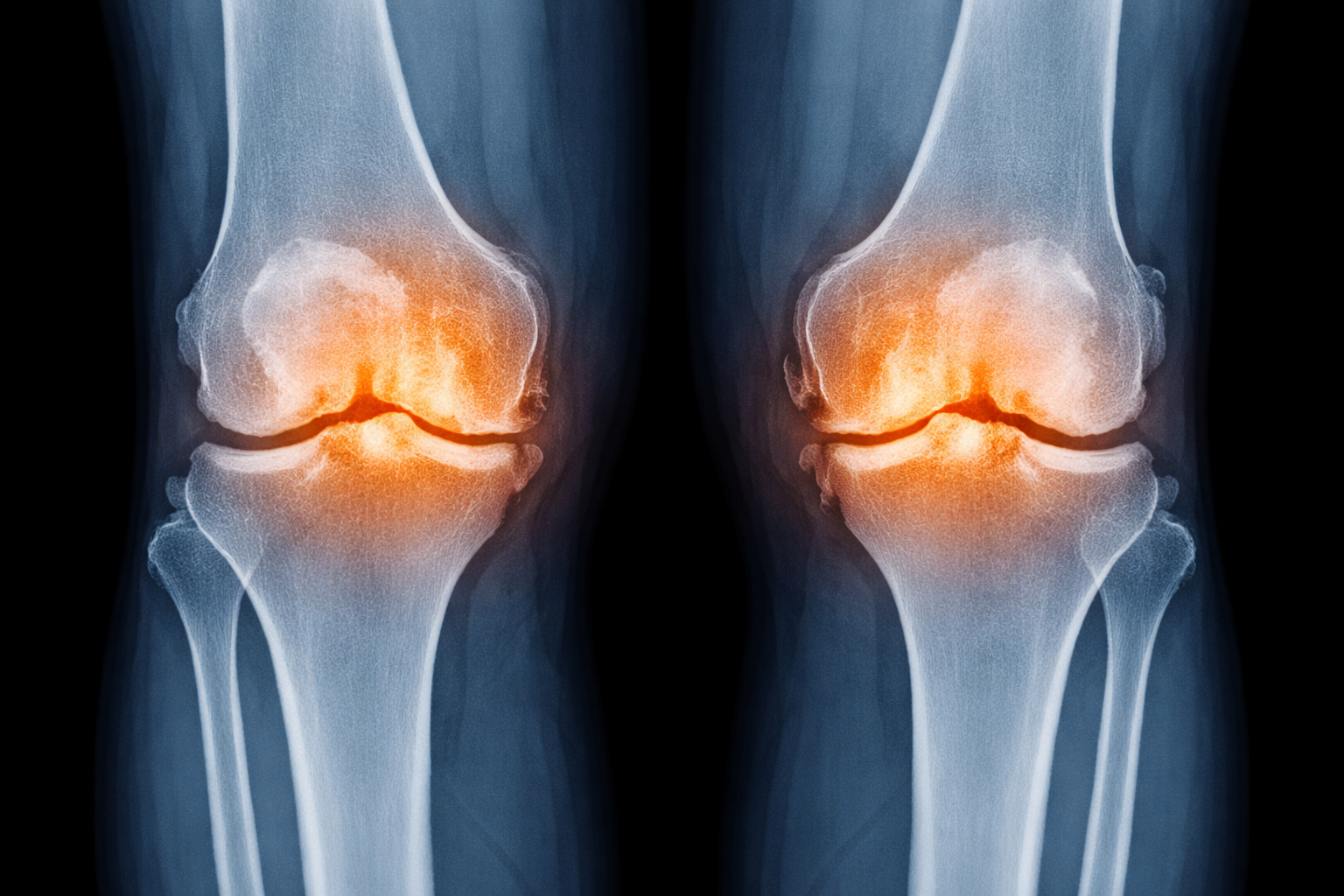
As a driver, you get some ailments along the way during your career.
Whether it’s a herniated disc or, as in my case, wear and tear on individual joints.
This is then called arthritis. Currently, I have arthritis in my right wrist and both knee joints. The latter is also due to my overweight and the previous constant jumping off the truck or from the truck.
Now I have this drama. Knee arthritis as occupational disease
Arthritis in both knee joints can be recognized as an occupational disease by the BG under certain circumstances.
But for this to be the case, certain things must be present:
- The arthritis must have first occurred after September 30, 2002
- Very important: It must have occurred simultaneously in both knee joints.
If the arthritis occurred only in one knee before the cutoff date and then in the other joint after the cutoff date, you already have poor chances.
What is arthritis?Arthritis is joint pain that arises from damage to the cartilage layer between the bones, usually due to wear and tear. For certain activities with high knee load, arthritis in the knee (so-called gonarthrosis) was recognized as a possible occupational disease in 2009, for example for activities that require frequent kneeling or squatting. However, the new regulation applies only to new cases after September 30, 2002.
Ruling of the Bundessozialgericht
The Bundessozialgericht in Kassel had a case where the plaintiff wanted to challenge the cutoff date regulation. Unfortunately, without success.
He was employed as a mason for years and thus exposed to frequent knee loads. In September 2002, which is before the cutoff date, arthritis was diagnosed in the left knee. Later, wear-related pain and restricted mobility developed in the right knee. In 2003, the man received an artificial knee joint on the right side.
In 2009, knee arthritis was added to the catalog of occupational diseases. In 2010, the aforementioned mason sued for the recognition of his knee arthritis as an occupational disease. The BG Bauwirtschaft rejected the claim.
The Bundessozialgericht in Kassel gave the BG the right and decided in its ruling that wear-related arthritis of the knee joints is an “unified course of illness.” That is, both knee joints must be affected by wear and at the same time.
Further, it states:
Quote:This is also supported by the fact that the wear and the resulting complaints “arise from the same cause, that is, can be traced back to one and the same activity.”
Since arthritis in the left knee was already diagnosed in September 2002, which is before the cutoff date, recognition as an occupational disease is excluded, ruled the BSG on March 20, 2018 (Az.: B 2 U5/16 R).
Source: VDK
