

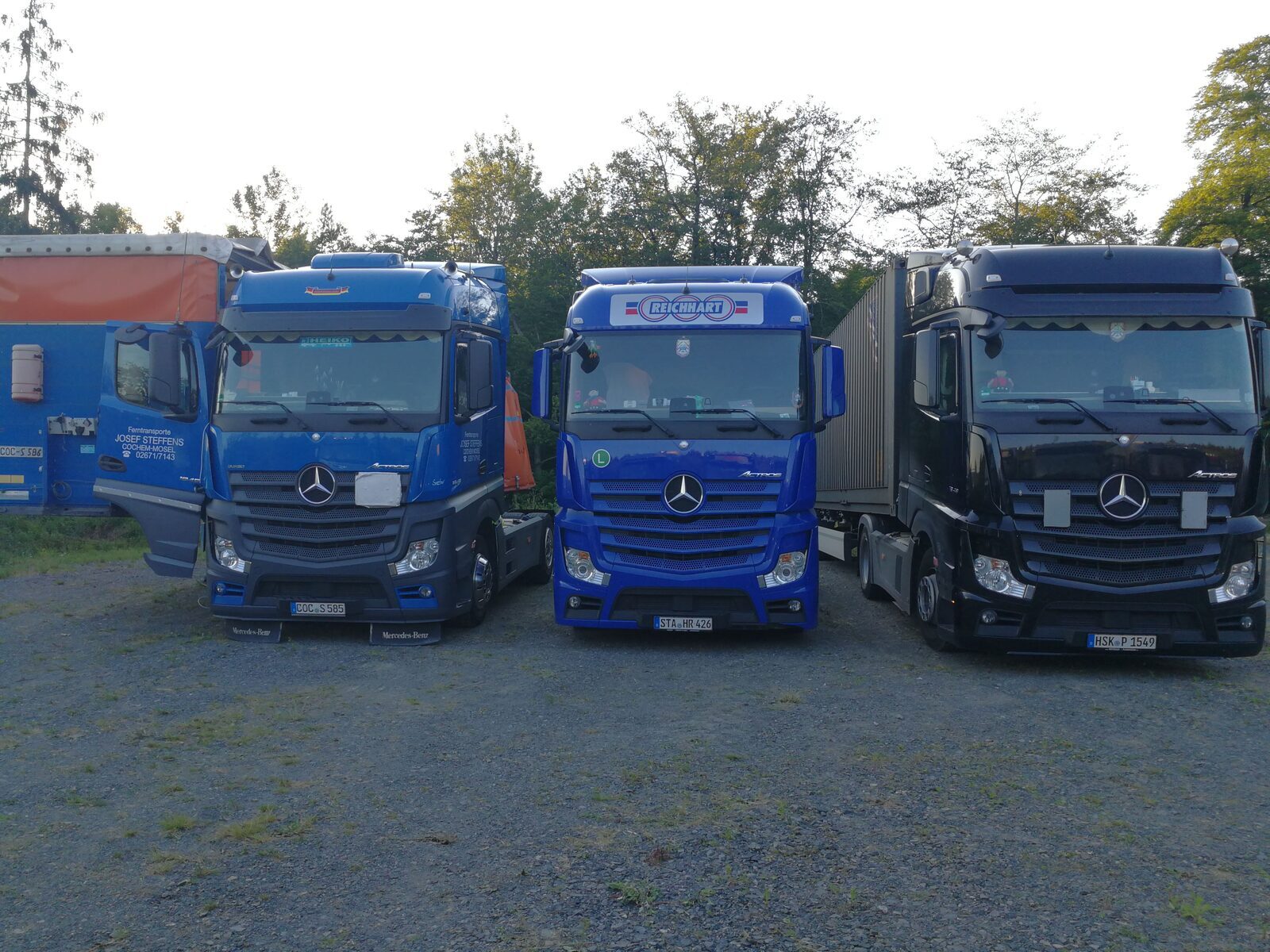
 Nürburg Ring 2018
This is the title of the current press release from Brussels as of today at 13:25.
In Brussels, once again, overpaid theorists have gathered to think about Safe Vehicles in the EU.
Some of the new regulations are certainly open to debate, while other measures undoubtedly offer their benefits.
More Assistance Systems
The regulations are set to come into force from 2022 and will apply to all vehicles placed on the markets of the EU from mid-2022 onwards.
The background is an increase in safety for all road users. Therefore, not only trucks are affected, but also passenger cars (cars) and delivery vans.
But exactly what should now apply?
For all vehicles:
- intelligent speed assistant,
- device for the installation of an alcohol-sensitive immobilizer,
- driver fatigue detection and attention warning system,
- advanced distraction detection,
- emergency braking lights,
- systems for detecting when reversing,
- crash data recorder,
- precise tire pressure monitoring.
Furthermore, special modern safety measures are prescribed for passenger cars and delivery vans. These include:
- emergency braking assistance systems,
- lane keeping assistance systems,
- extended head protection areas, which can reduce potential injuries to unprotected road users such as pedestrians and cyclists in the event of a collision.
The turn signal assistant will also become mandatory for trucks from mid-2022. However, as noted above, this applies only to new vehicles; retrofitting is not currently planned.
However, there is little room for maneuver here, as trucks must then be equipped so that the blind spot around the truck is significantly reduced. What exactly is meant by this remains to be seen. Furthermore, they must be equipped with systems capable of detecting pedestrians and cyclists in the immediate vicinity of the vehicle.
What else is coming?
In addition, the Commission has the option, via the regulation, to issue specific provisions for the safety of hydrogen-powered vehicles and autonomous driving vehicles. Generally, the regulation stipulates that the Commission must update the above-mentioned specifications to take account of future technical developments.
The regulation updates existing vehicle safety regulations contained in Regulation (EC) No 661/2009 on general vehicle safety and Regulation (EC) No 78/2009 on the protection of pedestrians.
The full text of the regulation can be found here: https://data.consilium.europa.eu/doc/document/PE-82-2019-INIT/de/pdf
The press release can be read here .
Whether all this will contribute to us having Safe Vehicles in the EU remains to be seen. What is definitely clear, however, is that many will complain again that there will be even more assistants who want to “dictate how we drive” in vehicles.
Saying that assistants only support and do not dictate anything won’t help either.