

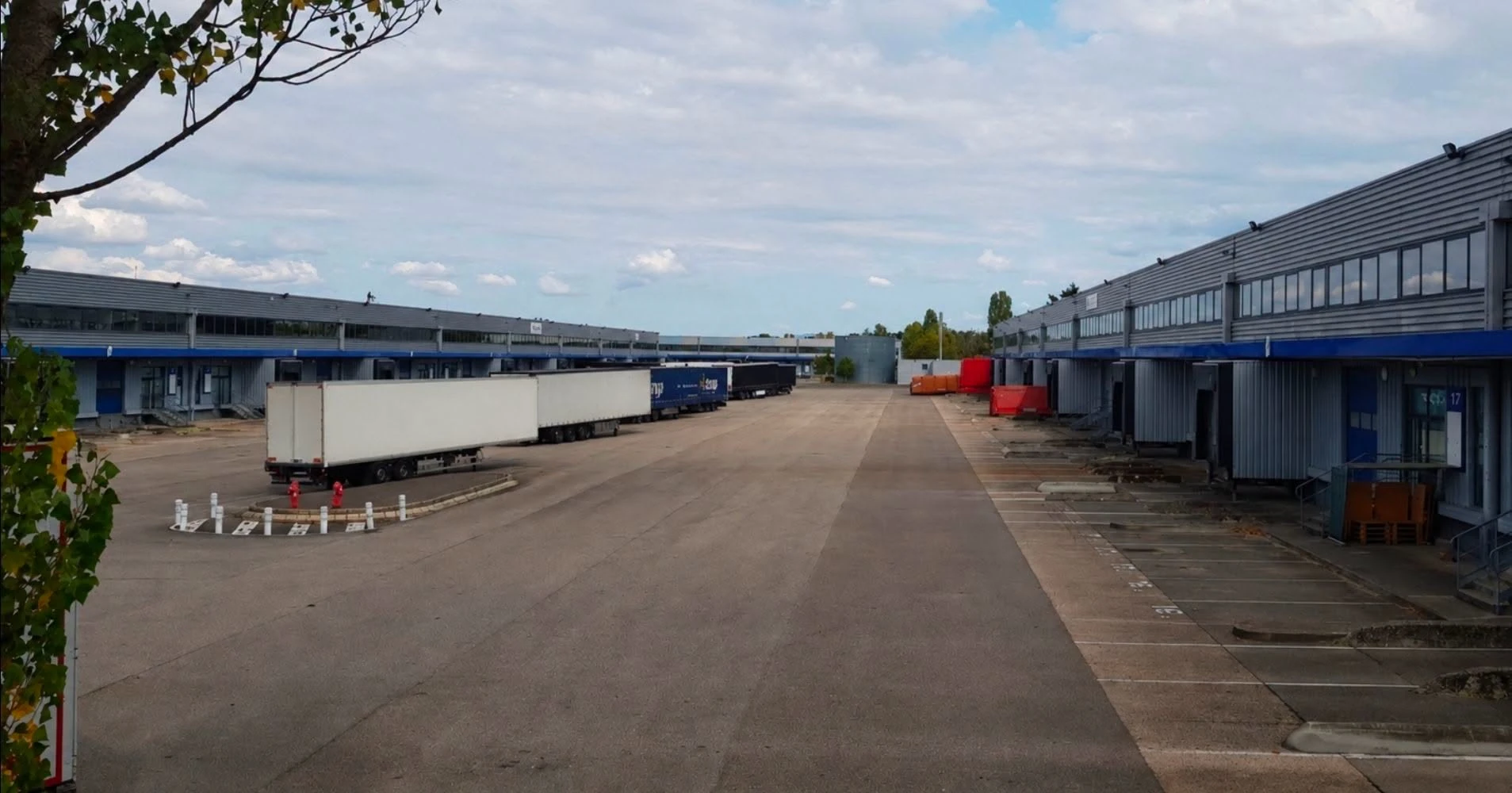
Bankruptcies Are Not a Matter of Chance
When supply chains collapsed during the Corona pandemic, many companies were kept afloat by state aid, loans, and special regulations. This was necessary and correct. At the same time, however, economic problems were often merely postponed rather than resolved.
Since the end of the pandemic, many developments have caught up with the industry simultaneously:
- Weak industrial demand
- High energy prices
- Rising financing costs
- Expansion of the truck toll (Lkw-Maut)
- Increasing personnel and workshop costs
- Shrinking margins in competition
- Overcapacity in European freight transport
The result is a trend that has now affected large parts of the transport sector.
The Numbers Speak Clearly
The transport and warehousing sector now records one of the highest bankruptcy rates among all economic sectors in Germany. According to the Federal Statistical Office, there were 133 bankruptcies per 10,000 companies in this industry in 2025 – more than in any other economic sector. At the same time, the number of corporate bankruptcies nationwide increased by 10.3 percent compared to the previous year and reached a record high of over 24,000 cases since 2014.
This trend continues into 2026 as well. Business credit agencies and research institutes continue to report high bankruptcy figures and see no sign of sustainable relief so far. Particularly affected remain, among others, transport, logistics, and warehousing.
These are not isolated poor decisions by entrepreneurs. Rather, more and more businesses find themselves in a situation where costs rise faster than revenues.
Sternheim, Betz, and Many Others
Economic difficulties now affect far more than individual companies. An example is the closure of the transport division of Sternheim in Neumünster, as described in media reports. The bankruptcy of Betz International also stands as a symbol for the problems facing numerous transport companies today.¹
Both cases point to similar stress factors:
- Weak economic conditions
- Rising operating costs
- High diesel prices
- Shrinking profit margins
- Growing competitive pressure
The bankruptcy of Betz International in the spring of 2026 particularly highlights the problem. The company justified its application for insolvency with a combination of weak economic conditions and a cost explosion in the logistics sector. Despite a good order book and ongoing business operations, the company fell into financial trouble.
Notably, many companies do not fail due to a lack of orders. In some cases, order books remain well filled. The problem lies rather in the fact that there is hardly any room left between an order and profit.
More and more transports are carried out without generating sustainable economic results.
¹ Media reports on the closure of the transport division of Sternheim in Neumünster (SHZ, June 2026).
The SME as Loser
Small and medium-sized enterprises (SMEs) are particularly affected.
Large corporations often have:
- International networks
- Own warehousing structures
- Long-term contracts
- Larger capital reserves
- Greater negotiating power vis-à-vis clients
The classic family business with 20, 50, or 100 vehicles usually does not possess these opportunities.
These companies were the backbone of European transport for decades. They trained drivers, invested regionally, and fostered competition.
If these companies disappear, structures emerge that are increasingly dominated by a few large market players.
The Role of European Liberalization
The foundation for today’s situation was laid long before Corona.
With the opening of the European market, enormous differences emerged in:
- Labor costs
- Social security contributions
- Tax burdens
- Corporate structures
While clients can shop across Europe, many national costs remain in place.
Transport increasingly came to be viewed as an interchangeable service, where the lowest price often became more important than sustainability, quality, or social standards.
The result is permanent price pressure along the entire supply chain.
The Toll as an Additional Cost Driver
The introduction of the CO₂ component in the German truck toll led to significant additional costs.
In principle, the goal of emission reduction is understandable.
The problem, however, is that additional burdens are often introduced faster than economically viable alternatives become available.
Many companies must pay the higher costs immediately but cannot fully pass them on to their clients.
Energy Crisis and Geopolitical Conflicts
Russia’s attack on Ukraine triggered an energy crisis whose effects are still felt today.
Additional tensions in the Middle East and conflicts surrounding Iran repeatedly cause uncertainty in energy markets.
Even minor fluctuations in diesel prices can cause additional costs in the range of hundreds of thousands or millions per year for fleets with dozens of vehicles.
For companies with profit margins often of only one to three percent, this can decide between survival and bankruptcy.
The Real Danger
The greatest danger does not lie in individual bankruptcies.
The greatest danger is that politics, business, and the public continue to view this development as a mere string of isolated cases.
Each individual bankruptcy is explained as:
- Poor corporate management
- Wrong strategy
- Unfavorable market conditions
But when thousands of companies disappear within a few years and road freight transport remains one of the most insolvency-prone sectors, this is no longer just a matter of isolated cases.
Then we are dealing with a structural problem.
A warning signal for Europe
Road freight transport is more than just an industry.
It connects industry, trade, agriculture, and consumers.
When ever more transport companies are forced to shut down, it is not only a problem for drivers or entrepreneurs.
It is a warning signal for the entire European economy.
For where transport can no longer be carried out profitably, production,
Supply and prosperity come under pressure
The crisis of transport companies is therefore not the end of an industry.
It may well be the beginning of a much larger economic development, whose effects many people will only notice when shelves are empty, products become more expensive, and supply chains become increasingly vulnerable to disruptions.
